






















Understanding the Impact of Sedentary Work on Back Health
How Sitting Affects Your Spine
Spending prolonged hours sitting at a desk can place significant strain on the spine. When seated for long periods, the natural curve of the lower back can flatten, increasing pressure on spinal discs and muscles. This posture often leads to stiffness, discomfort, and an increased risk of developing chronic back pain. The lack of movement reduces circulation and weakens the muscles that support the spine, making it more vulnerable to injury and poor alignment.
Common Posture Problems in Desk Jobs
Many desk workers unknowingly adopt poor posture habits such as slouching, rounded shoulders, and forward head positioning while typing or looking at screens. These habits contribute to muscle imbalances and tension, especially in the neck, upper back, and lower lumbar regions. Another frequent issue is sitting without lumbar support, which further exacerbates lower back stress. Over time, these problems not only cause discomfort but can also reduce overall productivity and well-being.
Top Simple Desk Exercises to Alleviate Back Pain
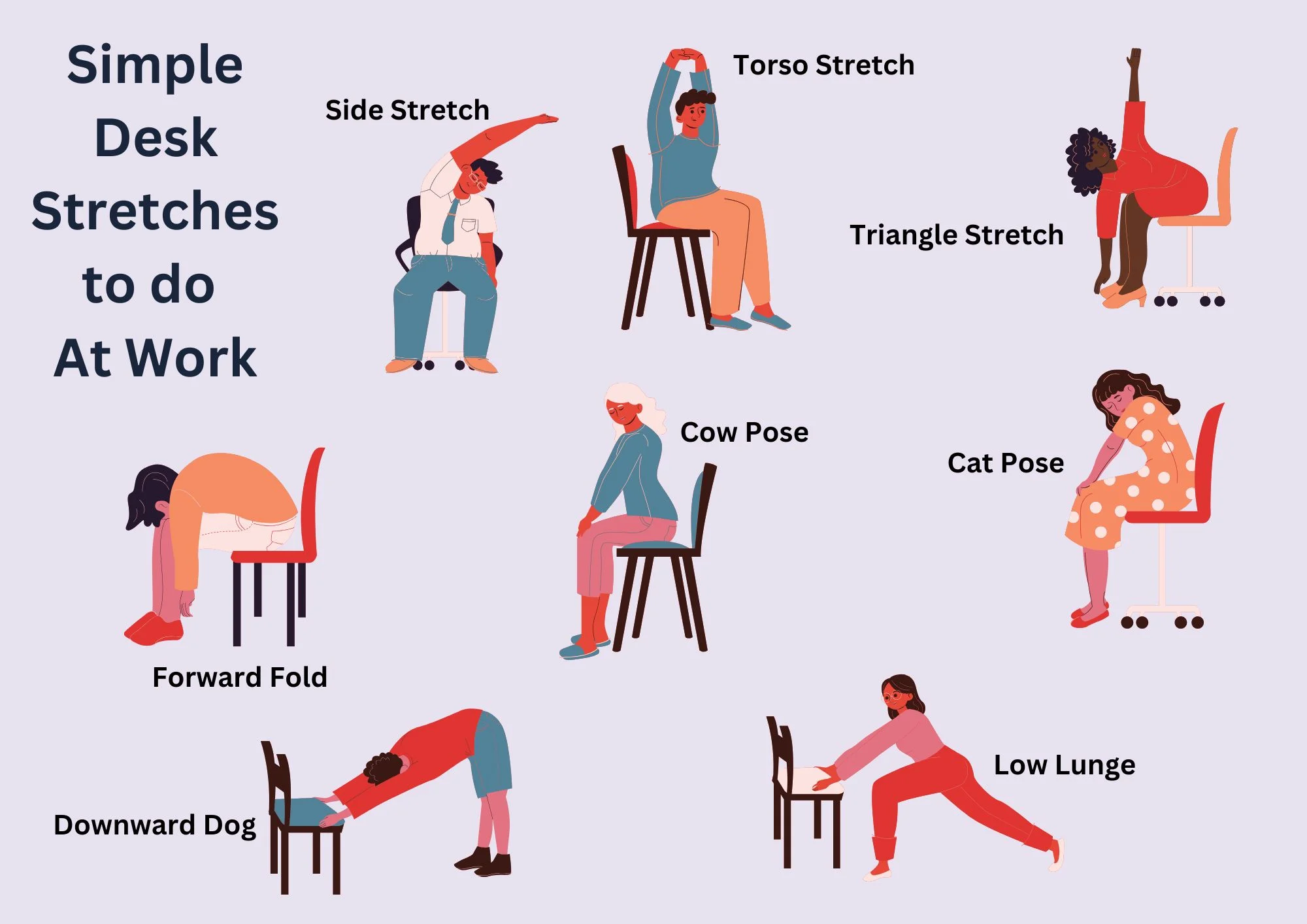
Seated Spinal Twists
Back pain often worsens due to stiffness and lack of rotation in the spine. Seated spinal twists provide a safe way to encourage movement and relieve tension. However, forcing the twist beyond a comfortable range can cause discomfort or injury. To benefit most, move gently into the twist, keeping the motion pain-free and controlled. This simple exercise helps increase spinal flexibility and reduces tightness in the lower back area.
Shoulder Blade Squeezes
Rounded shoulders from hours of typing can tighten chest muscles and weaken upper back muscles, contributing to poor posture. Shoulder blade squeezes counter this by activating and strengthening the muscles between the shoulder blades. It’s essential to avoid shrugging the shoulders when performing this exercise to prevent additional tension in the neck and upper traps. A slow and deliberate squeeze held for a few seconds can help maintain better alignment throughout the day.
Neck Stretches for Tension Relief
Neck tension is a common complaint among desk workers due to prolonged forward head posture and screen viewing. Gentle neck stretches, such as chin tucks, can reduce tightness and improve posture, but they should be performed slowly and without forcing the motion. Holding the chin tuck for several seconds and repeating it in multiple sets encourages neck muscle balance and reduces strain, which helps ease discomfort and supports a healthier head alignment.
Improving Posture Through Daily Desk Routines
Stretching Breaks Every Hour
One of the easiest solutions to combat sedentary strain is taking regular stretching breaks. Without scheduled movement, muscles tighten and posture deteriorates. Brief stretching routines every 1 to 2 hours help reset posture and improve circulation. Exercises performed slowly and mindfully can prevent common mistakes like rushing through movements or pushing into pain. Standing during stretches, when possible, increases their effectiveness by engaging more muscle groups and promoting better balance.
Using Ergonomic Support Effectively
Ergonomic support plays a crucial role in maintaining healthy posture at your desk. Chairs with proper lumbar support can reduce the risk of lower back pain; however, one size doesn’t fit all, so adjustments should be made to match individual needs. Proper alignment of your chair, desk, and screen height is equally important to prevent slouching or leaning forward. Investing in adjustable equipment and learning correct ergonomic setup ensures that your workstation supports your spine throughout the workday.
Long-term Benefits of Consistent Desk Exercises
Enhanced Spine Flexibility and Strength
Making desk exercises a routine habit leads to improved spinal flexibility and strength over time. Regular movement counters the stiffness that results from prolonged sitting and helps maintain the natural curves of the spine. Strengthened muscles provide better support, reducing undue pressure on joints and discs. This increased spinal health ultimately promotes greater comfort and mobility both during and outside of work hours.
Reduced Risk of Chronic Pain and Injury
Consistent engagement in targeted desk exercises reduces the likelihood of developing chronic back pain and related injuries. When muscles remain active and balanced, they protect the spine from strain caused by repetitive or static postures. Avoiding common errors such as rushing exercises or maintaining poor posture during breaks enhances these protective benefits. Though exercises help manage discomfort, persistent pain should always be evaluated by a healthcare professional to rule out underlying issues.
Additional Tips: Creating a Back-Friendly Work Environment
Adjusting Your Chair and Monitor Height
Improper chair and monitor height are often overlooked contributors to back pain. When your chair is too low or too high, it forces compensatory postures that increase spinal strain. Similarly, monitor placement that is too low encourages forward head posture. Adjusting your seat to keep feet flat on the floor and your eyes level with the top of the screen helps maintain a neutral spine. Small, thoughtful adjustments throughout the workday can prevent strain before it starts.
Incorporating Movement Into Your Workday
Remaining stationary for hours leads to muscular stiffness and poor posture. Breaking up your workday by getting up and moving every 30 to 40 minutes—even without a standing desk—helps reduce these risks. Incorporate simple moves such as standing stretches or walking breaks to improve circulation. Paying attention to balance during exercises and staying mindful during movement can make these small changes significantly improve your back health and overall comfort at work.